thyroid diet

Thyroid Diet: Foods to Eat and Avoid for Hypothyroidism and Hashimoto's

Cookta Care Team
Share
Thyroid Diet: Foods to Eat and Avoid for Hypothyroidism and Hashimoto's

Understanding Thyroid Health: Why Your Diet Matters

If you're living with hypothyroidism or Hashimoto's thyroiditis, you know the frustration all too well. The persistent fatigue that makes getting through the day feel like climbing a mountain. The unexplained weight gain that won't budge no matter how careful you are. The brain fog that turns simple tasks into challenges.

You're not alone in this struggle. Thyroid conditions affect an estimated 20 million Americans, and women are five to eight times more likely than men to experience thyroid problems. Hashimoto's thyroiditis, an autoimmune condition where your immune system attacks your thyroid gland, is the most common cause of hypothyroidism in the United States.

While medication is often necessary for managing these conditions, what you eat can significantly impact how well your thyroid functions and how you feel day to day. Nutrition isn't a cure, but it's a powerful tool in your wellness toolkit.

Real Dietitians, Real Results

Download on the App StoreGet it on Google Play

Essential Nutrients for Thyroid Function

Your thyroid gland produces hormones that regulate metabolism, energy, body temperature, and countless other processes. To do this job effectively, it requires specific nutrients. Understanding these building blocks can help you make informed food choices.

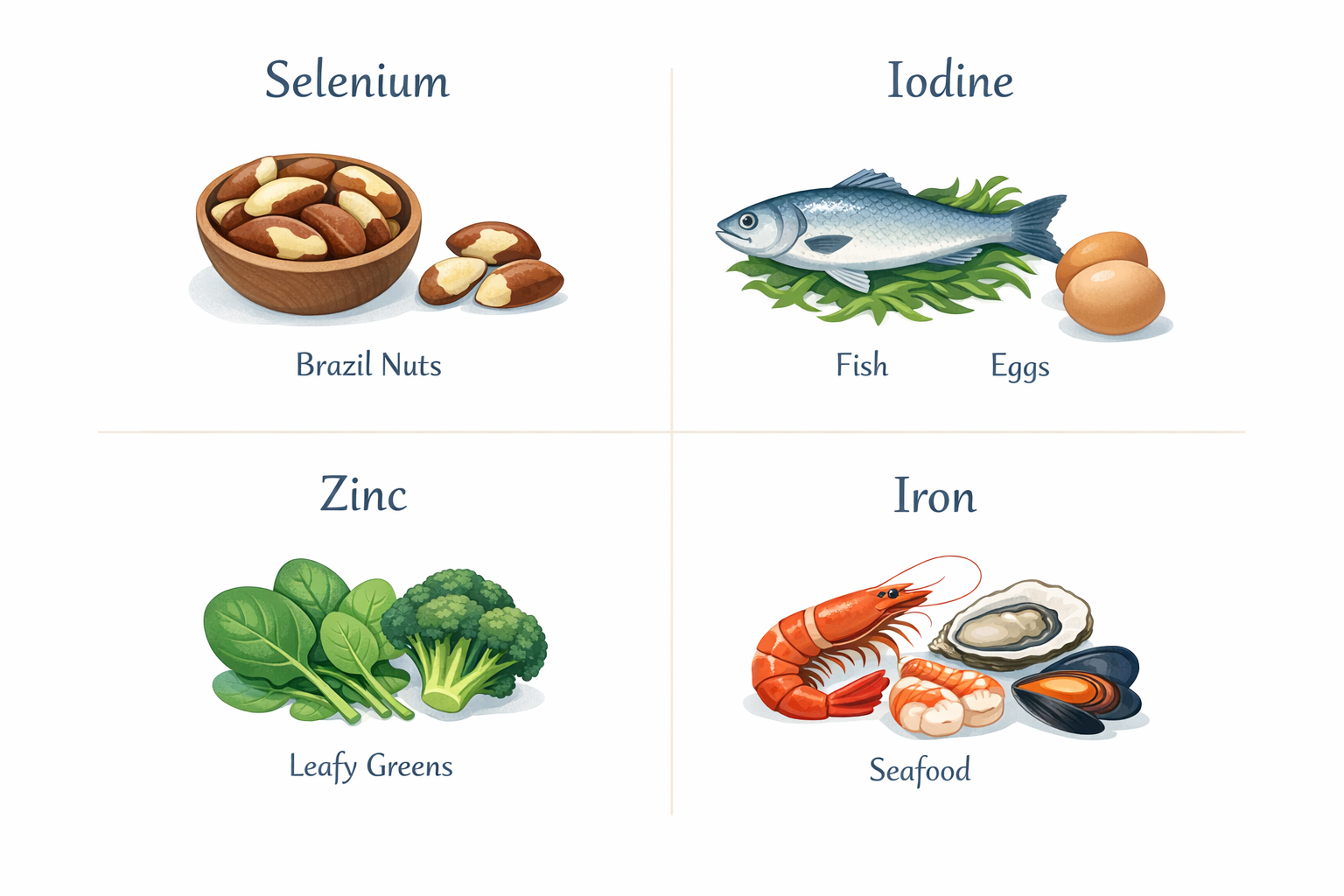
Infographic showing key thyroid nutrients including selenium, iodine, zinc, and iron with their corresponding food sources arranged in a clean grid layout

Iodine: The Foundation of Thyroid Hormones

Iodine is perhaps the most well-known thyroid nutrient because your thyroid uses it to make thyroid hormones. Without adequate iodine, your thyroid cannot produce enough thyroxine (T4) and triiodothyronine (T3).

Real Dietitians, Real Results

Download on the App StoreGet it on Google Play

Food sources of iodine include:

  • Seaweed (kelp, nori, wakame)
  • Cod and other seafood
  • Iodized salt
  • Dairy products
  • Eggs

Important caution: While iodine deficiency can cause thyroid problems, excessive iodine can also trigger or worsen thyroid issues, particularly in people with Hashimoto's. Most people in developed countries get enough iodine through iodized salt and food sources. Avoid high-dose iodine supplements unless specifically recommended by your healthcare provider.

Selenium: Converting T4 to Active T3

Selenium plays a crucial role in converting the inactive thyroid hormone T4 into the active form T3 that your cells actually use. It also helps protect your thyroid from oxidative damage.

Excellent selenium sources:

  • Brazil nuts (just 1-2 per day provides your daily requirement)
  • Tuna, sardines, and salmon
  • Shrimp and other shellfish
  • Eggs
  • Chicken and turkey
  • Sunflower seeds

Zinc: Supporting Hormone Synthesis

Zinc works alongside selenium to support thyroid hormone production and conversion. It also helps regulate your immune system, which is particularly relevant for those with autoimmune Hashimoto's.

Real Dietitians, Real Results

Download on the App StoreGet it on Google Play

Zinc-rich foods:

  • Oysters (the highest zinc source)
  • Beef and lamb
  • Pumpkin seeds
  • Chickpeas and lentils
  • Cashews
  • Yogurt

Iron: The Thyroid Connection

Iron deficiency is surprisingly common, especially in women, and it can impair thyroid function. Your thyroid needs iron to produce the enzyme that converts T4 to T3.

Iron-rich foods:

  • Red meat
  • Dark poultry meat
  • Spinach and other leafy greens
  • Lentils and beans
  • Fortified cereals
  • Tofu

Tip: Pair plant-based iron sources with vitamin C-rich foods like bell peppers, citrus, or strawberries to improve absorption.

Tyrosine: The Amino Acid Building Block

Tyrosine is an amino acid that combines with iodine to form thyroid hormones. Your body can produce some tyrosine, but getting adequate dietary protein ensures you have enough.

Real Dietitians, Real Results

Download on the App StoreGet it on Google Play

Good sources of tyrosine:

  • Chicken and turkey
  • Fish
  • Dairy products
  • Eggs
  • Nuts and seeds
  • Beans and legumes

Best Foods to Eat for Hypothyroidism

Building a thyroid-supportive diet means focusing on nutrient-dense whole foods that provide the building blocks your thyroid needs. Here's your thyroid diet food list.

Fatty Fish for Omega-3s and Selenium

Salmon, sardines, mackerel, and wild-caught fish provide anti-inflammatory omega-3 fatty acids along with selenium. Aim for two to three servings of fatty fish per week. These healthy fats may also help reduce the inflammation associated with autoimmune thyroid conditions.

Brazil Nuts: Your Selenium Powerhouse

Brazil nuts are remarkably concentrated sources of selenium. One to two Brazil nuts per day can meet your selenium needs. Don't overdo it, as excessive selenium can cause problems including hair loss, nail brittleness, and neurological issues.

Real Dietitians, Real Results

Download on the App StoreGet it on Google Play

Leafy Greens and Vegetables

Spinach, Swiss chard, collard greens, and other leafy vegetables provide iron, vitamins, and antioxidants. The key is proper preparation, which we'll discuss in the goitrogen section.

Lean Proteins

Chicken, turkey, eggs, and legumes provide the protein and tyrosine your thyroid needs. Include a protein source at each meal for sustained energy and thyroid support.

Whole Grains and Complex Carbohydrates

Quinoa, brown rice, oats, and sweet potatoes provide fiber and sustained energy. Some people with Hashimoto's feel better limiting grains, so pay attention to how your body responds.

Real Dietitians, Real Results

Download on the App StoreGet it on Google Play

Eggs and Dairy

Eggs provide iodine, selenium, and protein in one convenient package. Greek yogurt and other dairy products offer iodine, protein, and probiotics for gut health.

Foods to Avoid with Hashimoto's and Hypothyroidism

Understanding which foods might interfere with thyroid function helps you make informed choices. Let's address some common concerns.

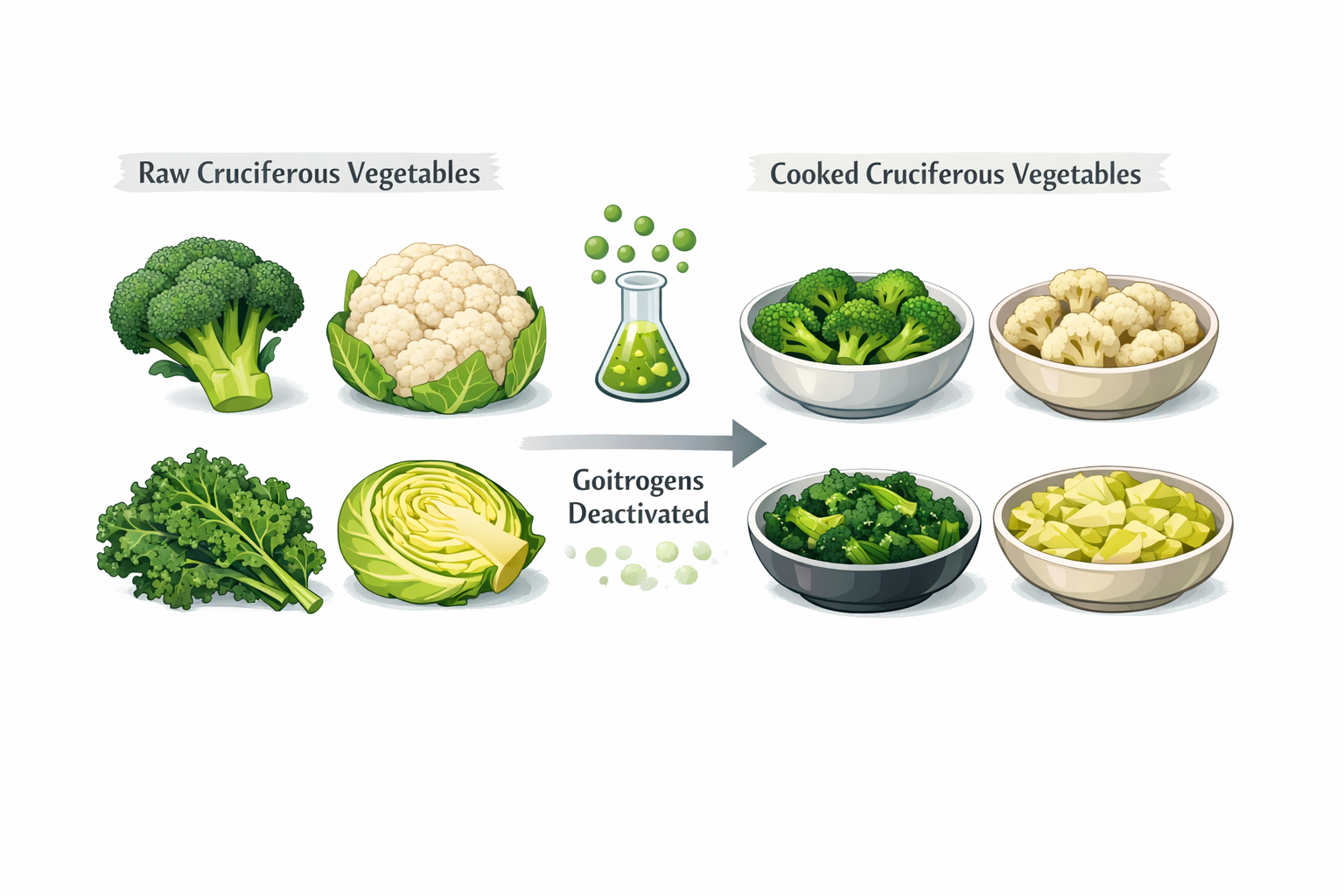
Visual comparison showing raw cruciferous vegetables alongside cooked versions, with arrows demonstrating how cooking deactivates goitrogens in broccoli, cauliflower, kale, and cabbage

Real Dietitians, Real Results

Download on the App StoreGet it on Google Play

Goitrogens in Cruciferous Vegetables

Goitrogens are compounds that can interfere with thyroid function by blocking iodine uptake. They're found in raw cruciferous vegetables like:

  • Broccoli and cauliflower
  • Cabbage and Brussels sprouts
  • Kale and bok choy
  • Turnips and rutabaga

Here's the good news: Cooking significantly reduces goitrogenic compounds. Steaming, roasting, or sauteing these vegetables makes them safe and nutritious choices for most people with thyroid conditions. You'd need to eat very large amounts of raw cruciferous vegetables daily for them to significantly impact thyroid function.

If you enjoy raw kale in smoothies or broccoli in salads, consider alternating with cooked versions and keeping portions reasonable.

Soy Products and Timing

Soy contains compounds called isoflavones that can interfere with thyroid hormone absorption. The key is timing: if you take thyroid medication, wait at least four hours after taking your medication before consuming soy products.

Real Dietitians, Real Results

Download on the App StoreGet it on Google Play

Moderate amounts of soy as part of a varied diet are generally fine for most people with well-managed thyroid conditions. The biggest concern is soy interfering with medication absorption.

Gluten and Hashimoto's

Research suggests a connection between celiac disease and autoimmune thyroid conditions. Some people with Hashimoto's report feeling better on a gluten-free diet, even without celiac disease.

The evidence isn't conclusive for everyone with Hashimoto's, but if you notice digestive symptoms or fatigue after eating gluten, discuss testing with your healthcare provider. A trial elimination under professional guidance may be worthwhile.

Real Dietitians, Real Results

Download on the App StoreGet it on Google Play

Highly Processed Foods and Added Sugars

Processed foods, refined sugars, and artificial additives can contribute to inflammation and blood sugar instability. These foods don't directly harm your thyroid, but they don't support overall health either. Minimizing them can help you feel better overall.

Excessive Caffeine and Alcohol

Large amounts of caffeine can interfere with thyroid medication absorption and may worsen anxiety or sleep issues. Alcohol can affect liver function, which plays a role in thyroid hormone conversion. Moderation is key.

Thyroid Medication and Food Timing

Proper medication timing is one of the most important factors in managing hypothyroidism effectively. Levothyroxine and other thyroid medications require specific conditions for optimal absorption.

Real Dietitians, Real Results

Download on the App StoreGet it on Google Play

How to Take Thyroid Medication Properly

Best practices for thyroid medication:

  • Take on an empty stomach, at least 30-60 minutes before eating or drinking anything besides water
  • Take at the same time each day for consistent blood levels
  • Wait at least four hours before taking calcium or iron supplements
  • Wait at least four hours before consuming soy products
  • Avoid taking with coffee or other beverages

Foods and Supplements That Interfere with Absorption

Several substances can bind to thyroid medication and reduce its effectiveness:

  • Calcium supplements and calcium-fortified foods
  • Iron supplements
  • High-fiber foods (if eaten too close to medication time)
  • Antacids containing aluminum or magnesium
  • Cholesterol-lowering medications

If you take any of these, discuss timing with your pharmacist or healthcare provider. Consistency matters more than perfection -- find a routine that works and stick with it.

Practical Meal Planning for Thyroid Health

Putting this information into practice doesn't have to be complicated. Here's a sample day of thyroid-supportive eating.

Sample Thyroid-Friendly Day

Breakfast (at least 1 hour after medication):

  • Greek yogurt with berries and 1-2 chopped Brazil nuts
  • Or: Scrambled eggs with spinach and a slice of whole-grain toast

Lunch:

  • Grilled salmon salad with mixed greens, roasted vegetables, and olive oil dressing
  • Or: Turkey and avocado wrap on a whole-grain tortilla with vegetable sticks

Afternoon Snack:

  • Apple slices with almond butter
  • Or: Hummus with carrot and cucumber sticks

Dinner:

  • Baked chicken with roasted sweet potato and steamed broccoli
  • Or: Lentil soup with a side salad

Budget-Friendly Thyroid Nutrition

Eating for thyroid health doesn't require expensive supplements or exotic foods. Focus on:

  • Canned salmon and sardines (affordable and nutritious)
  • Eggs as an inexpensive protein source
  • Frozen vegetables (just as nutritious as fresh)
  • Dried beans and lentils
  • Seasonal produce

Special Considerations for Hashimoto's

The Autoimmune Protocol (AIP) Diet

Some people with Hashimoto's explore the AIP diet, an elimination diet designed to reduce autoimmune symptoms. It removes common triggers like grains, legumes, dairy, eggs, nightshades, and processed foods, then systematically reintroduces them.


Real Dietitians, Real Results

Download on the App StoreGet it on Google Play

This approach requires commitment and should be done under professional guidance. While some people report significant improvement, it's not necessary for everyone with Hashimoto's.

Weight Management with Hypothyroidism

Weight gain and difficulty losing weight are common frustrations. Once your thyroid levels are properly managed with medication, the basic principles of weight management apply: focus on whole foods, adequate protein, regular movement, and sufficient sleep.

Crash diets can actually worsen thyroid function by slowing your metabolism further. Aim for gradual, sustainable changes.

Real Dietitians, Real Results

Download on the App StoreGet it on Google Play

When to Seek Professional Help

Dietary changes can support your thyroid health, but they have limitations. Consider working with a registered dietitian if:

  • Your symptoms persist despite medication and dietary changes
  • You're struggling with unexplained weight changes
  • You suspect food sensitivities or want to try an elimination diet
  • You have multiple chronic conditions requiring coordinated nutrition planning
  • You feel overwhelmed by conflicting nutrition information

The Value of Personalized Nutrition Guidance

Generic advice can only go so far. Your body, medical history, lifestyle, and food preferences are unique. A registered dietitian can help you create a personalized eating plan that addresses your specific needs while fitting into your real life.

Cookta Care connects you with qualified, registered dietitians who understand thyroid conditions and can provide personalized guidance. Unlike generic calorie-tracking apps that offer only AI-generated recommendations, Cookta Care empowers real dietitians with AI tools so they can provide you with the most current, evidence-based support. You get the best of both worlds: human expertise enhanced by modern technology.

Real Dietitians, Real Results

Download on the App StoreGet it on Google Play

Final Thoughts

Managing hypothyroidism or Hashimoto's involves more than just taking medication. Your food choices can support your thyroid function, energy levels, and overall wellbeing. Focus on nutrient-dense whole foods, time your medication properly, and pay attention to how different foods make you feel.

Remember that progress takes time. Be patient with yourself as you learn what works best for your body. Small, consistent changes often lead to the most sustainable results.

Always consult with your healthcare provider or a registered dietitian before making significant dietary changes, especially if you're taking thyroid medication. They can help ensure your nutrition plan supports your treatment and overall health goals.

Real Dietitians, Real Results

Download on the App StoreGet it on Google Play

If you're looking for personalized support, Cookta Care offers access to a community of registered, vetted dietitians who can work with you to create a thyroid-supportive eating plan tailored to your life. Real expertise, real support, real results.

Real Dietitians, Real Results

Download on the App StoreGet it on Google Play
#thyroid diet#hypothyroidism foods#Hashimoto nutrition

Others Viewed